Cryptanalysis is the most verifiable corner of historical mystery-solving. A proposed decryption either yields coherent language across the whole text using a consistent key, or it does not. That standard explains why some cipher mysteries close decisively while others attract endless doubtful "solutions". The oldest surviving description of frequency analysis, the technique behind most classical breaks, comes from the 9th-century Arab scholar al-Kindi.
Mary, Queen of Scots: two breaks, 437 years apart
Solved In 1586 Thomas Phelippes, working for Elizabeth I's secretary Sir Francis Walsingham, decrypted Mary's correspondence with Anthony Babington. The letters became evidence in the trial that led to her execution in 1587.
A second, separate body of Mary's ciphered letters sat misfiled in the Bibliothèque nationale de France. In 2023 George Lasry, Norbert Biermann and Satoshi Tomokiyo published decryptions of 57 letters, written between 1578 and 1584 and mostly addressed to the French ambassador Michel de Castelnau. They combined computer-assisted search with manual analysis of a homophonic cipher of more than 200 symbols.
Source: Lasry, Biermann & Tomokiyo, Cryptologia 47 (2023).
The Zimmermann Telegram
Solved In January 1917 the German Foreign Secretary Arthur Zimmermann sent an encrypted proposal for a German–Mexican alliance against the United States. British naval intelligence in Room 40, notably Nigel de Grey and William Montgomery, decrypted it. Its publication in American newspapers on 1 March 1917 helped move opinion toward war, which the US declared in April 1917.
Source: The National Archives (UK), HW 3/178; Thomas Boghardt, The Zimmermann Telegram (2012).
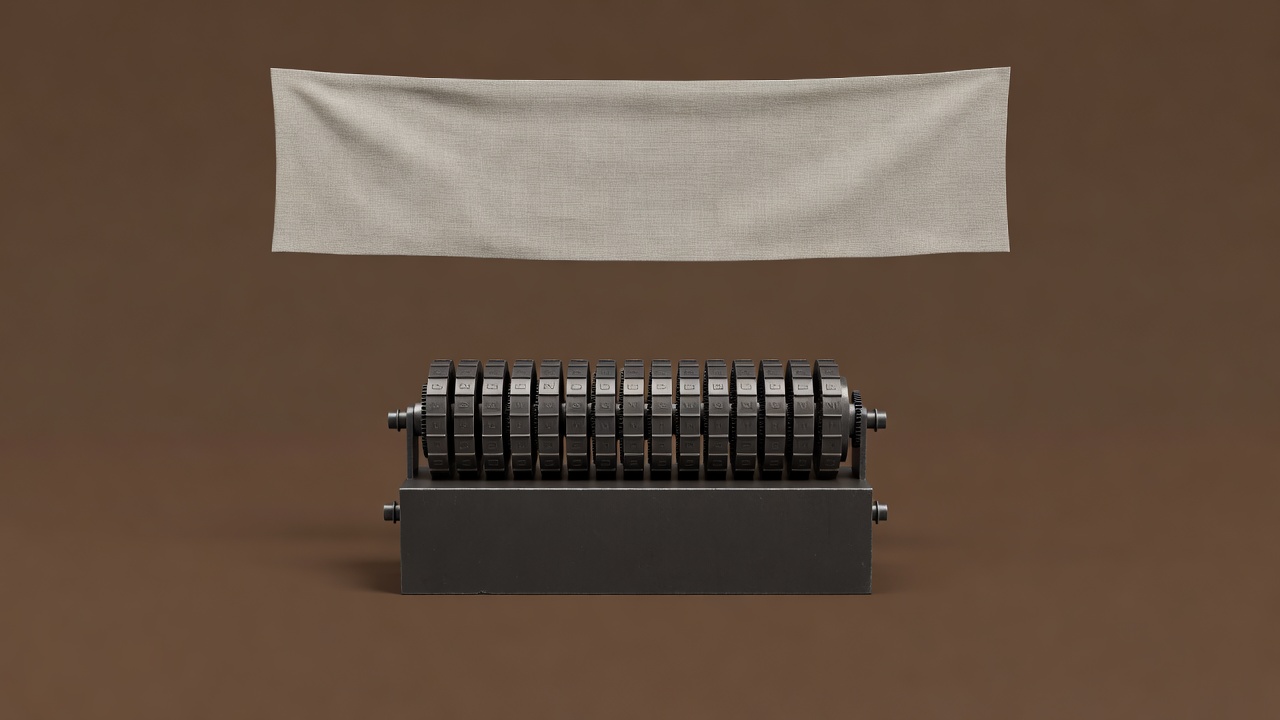
Enigma
Solved The first break came from the Polish Cipher Bureau. Marian Rejewski reconstructed the wiring of the military Enigma's rotors by the end of 1932, using mathematics and intelligence material supplied by France. With Jerzy Różycki and Henryk Zygalski he developed methods to recover daily keys. In July 1939, at Pyry near Warsaw, the Poles shared their work with British and French intelligence. At Bletchley Park, Alan Turing and Gordon Welchman designed the electromechanical bombe that industrialised key recovery.
The popular story starts at Bletchley Park. The documented story starts seven years earlier, in Warsaw.
Riddle Garden Frenzy editorial note, based on Rejewski's own accounts and Bletchley Park Trust historiesThe Copiale cipher and Z340
Solved The Copiale cipher, a 105-page 18th-century manuscript of symbols and Roman letters, was cracked in 2011 by Kevin Knight, Beáta Megyesi and Christiane Schaefer. It turned out to be the German-language ritual of a secret society calling itself the Oculists.
The Zodiac Killer's 340-character cipher, mailed to the San Francisco Chronicle in November 1969, was solved in December 2020 by David Oranchak, Sam Blake and Jarl Van Eycke, and confirmed by the FBI. The message taunts the public; it does not identify the killer. Solving a cipher closes the cryptographic question, not necessarily the historical one.
Ciphers still open
Open Kryptos. Jim Sanborn's sculpture, installed at CIA headquarters in Langley, Virginia, in 1990, has four sections. Three were solved in the 1990s; the fourth, K4, has not been publicly solved by cryptanalysis.
Open The Dorabella cipher. A short note of curved symbols sent by the composer Edward Elgar to Dora Penny in 1897. It is too short for confident analysis, and no proposed solution has won acceptance.
The claim
The three Beale ciphers lead to buried treasure in Bedford County, Virginia.
The record
The ciphers appear only in an 1885 pamphlet. The second was solved using the Declaration of Independence as a key and describes the treasure. The first and third remain unsolved; statistical studies and anachronisms in the pamphlet's language lead many cryptologists to suspect a hoax.
Evidence chronology
- 1586
Babington letters decrypted
Thomas Phelippes for Walsingham.
- 1917
Zimmermann Telegram published
After decryption by Room 40.
- 1932
Rejewski reconstructs Enigma rotors
Polish Cipher Bureau, Warsaw.
- 2011
Copiale cipher cracked
Knight, Megyesi and Schaefer.
- 2020
Z340 solved
Confirmed by the FBI.
- 2023
Mary's lost letters read
Published in Cryptologia.