Lost-location mysteries attract more speculation than any other category, partly because a map invites everyone to draw on it. This file looks at four cases that span the full range of outcomes: a site found but still debated, a colony whose people remain unaccounted for, ships found after more than 160 years, and an island that most likely never existed outside a philosophical dialogue.
Troy: a site found, a story still open
Partly open The mound of Hisarlik in north-western Turkey was identified as a candidate for Troy by Frank Calvert, who dug there in the 1860s. Heinrich Schliemann excavated from 1871, cutting a trench that destroyed parts of the layers he sought. Later work by Wilhelm Dörpfeld, Carl Blegen and, from 1988, Manfred Korfmann established a sequence of settlements spanning more than three millennia. The site became a UNESCO World Heritage Site in 1998.
Source: UNESCO World Heritage List, Archaeological Site of Troy (ref. 849); M. Korfmann, Troia excavation reports.
Hittite documents refer to a western Anatolian kingdom called Wilusa, which many scholars link with Greek (W)ilios. The identification of Hisarlik with Troy is widely accepted. Whether a war resembling the one in Homer's Iliad took place is a separate question, and the archaeology cannot answer it directly.
Roanoke: one word on a post
Open In 1587 about 115 English colonists settled on Roanoke Island, in present-day North Carolina, under governor John White. White sailed to England for supplies; war with Spain delayed his return until August 1590. He found the settlement dismantled, the letters "CRO" carved on a tree and "CROATOAN" carved on a post. The agreed distress sign, a cross, was absent.
Source: John White's account of the 1590 voyage, printed in Richard Hakluyt, Principal Navigations (1600).
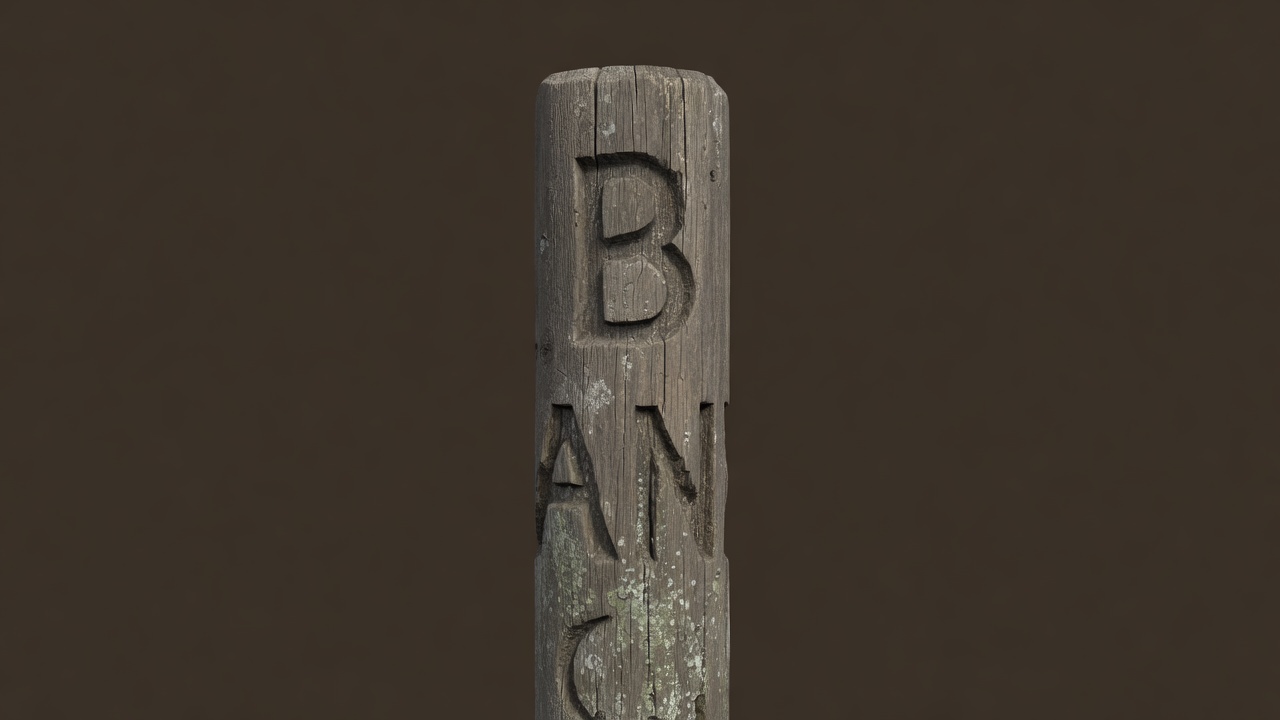
Croatoan was the name of an island and of a people allied to the English. The most economical reading is that some colonists moved there or inland and were absorbed into local communities. In 2012 the British Museum and the First Colony Foundation found that a patch on White's 1585 map, La Virginea Pars, concealed a drawn fort symbol inland, leading to excavations at "Site X". Finds there and on Hatteras Island include European objects, but none so far identifies the 1587 colonists specifically.
He found the word CROATOAN, and no sign of distress.
Riddle Garden Frenzy paraphrase of John White's 1590 narrative, as printed by HakluytThe Franklin ships: found after 169 years
Located Sir John Franklin left England in 1845 with HMS Erebus and HMS Terror and 129 men to complete the Northwest Passage. None returned. Inuit testimony, recorded by the explorer Charles Francis Hall in the 1860s and later studied by Dorothy Harley Eber and the Inuk historian Louie Kamookak, described abandoned ships and starving men.
Parks Canada located Erebus in 2014 in the Queen Maud Gulf area. In 2016 the Arctic Research Foundation found Terror in Terror Bay, after a tip from Inuk crew member Sammy Kogvik. Both locations broadly matched Inuit oral history. The ships are found; many details of the crews' final months remain open.
Source: Parks Canada, Wrecks of HMS Erebus and HMS Terror National Historic Site.
Atlantis: a record of one
The claim
Atlantis was a real advanced civilisation awaiting discovery.
The record
The only ancient source is Plato's dialogues Timaeus and Critias, written around 360 BCE, where Atlantis serves a philosophical argument about an ideal state. No earlier text and no archaeological evidence supports it.
"...in a single day and night of misfortune all your warlike men in a body sank into the earth, and the island of Atlantis in like manner disappeared in the depths of the sea."
Plato, Timaeus 25c–d, trans. Benjamin Jowett (1871)Still searching
Other open cases include the tomb of Alexander the Great in Alexandria, recorded by ancient writers but lost by late antiquity, and Amelia Earhart's disappearance near Howland Island on 2 July 1937. Each has documented facts at its core and competing hypotheses at its edges.
- 1590
White returns to Roanoke
Finds "CROATOAN" carved on a post.
- 1871
Schliemann digs Hisarlik
Following Frank Calvert's earlier work.
- 2012
Hidden fort symbol found
British Museum examination of White's map.
- 2014
HMS Erebus located
Parks Canada survey, Nunavut.
- 2016
HMS Terror located
Terror Bay, guided by Inuit knowledge.